Anton Chekhov
A Gentleman in MoscowAnton Chekhov is present in this episode not as a living participant but through his correspondence: a letter to his sister, Maria, dated June 6, 1904, and the choices made decades later while his collected letters are being prepared for publication. Its account of illness and apparent recovery becomes more than a textual problem when an editor asks for a word to be removed. The dispute makes Chekhov’s own words—and the vulnerability of those words in editorial hands—the center of the scene.
Identity and Correspondence
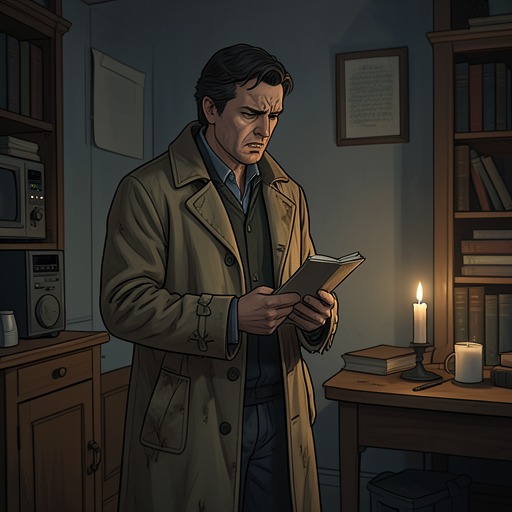
Chekhov’s role in the narrative is established through a long-running editorial project. Mikhail Mindich has been working on the forthcoming volumes of Chekhov’s collected letters since 1934, a task that requires close attention to wording and historical documents. The project is described as one of nuance and scholarship; Chekhov’s letters are not incidental material but the work Mishka has devoted years to preparing.
The particular letter is addressed to Chekhov’s sister Maria, whom he calls Masha. Its date and place are specified as Berlin, June 6, 1904. The letter’s domestic address to his sister matters to the scene: it is a personal account, written to reassure family, that is later handled as a galley in a publisher’s office. Chekhov’s private communication has become a text subject to professional review and possible alteration.
The June 6 Letter
In the letter, Chekhov recounts a severe illness that began in Moscow after cold weather and snow. He describes rheumatic pains in his arms and legs, sleepless nights, substantial weight loss, morphine injections, and numerous medicines. He remembers with gratitude a course of heroin once prescribed by Altschuller. As departure approached, he says his strength and appetite began to return; he also mentions giving himself arsenic injections before leaving the country thin and emaciated.
The account then shifts from debility to comfort. In Berlin, Chekhov says that he and his companions have a comfortable room in the best hotel and that he is enjoying life there. Bread, coffee, and dinners receive particular attention: he has been eating heartily, has already put on weight, and has taken a long ride to the Tiergarten despite the chill. He tells Masha that she can inform their mother and anyone else interested that he is recovering, or even already recovered.
That optimism acquires its poignancy from the fact that the letter was written only a few weeks before Chekhov’s death. The assurance is not presented as deception; it is the account he gives his sister from Berlin, after a period of illness and a felt return of strength. In retrospect, the ordinary details of food, travel, and family reassurance sit beside the knowledge that recovery would not last. The letter’s movement from pain to appetite therefore carries a dramatic contrast the writer himself could not have known in its final form.
The Editing Dispute
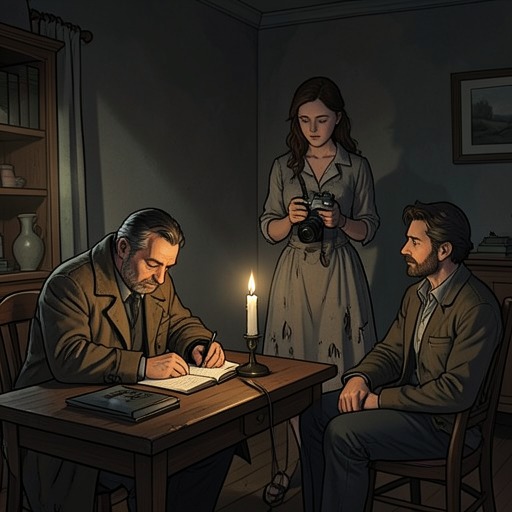
When the galleys are ready for review, Shalamov summons Mishka to his office instead of taking him to the celebratory lunch he had proposed. The pages, which Mishka had been led to believe were on their way to the printer, are still on the editor’s desk. Shalamov praises the work but points to an elision in the June 6 letter, explaining that a word was lost during typesetting. Mishka knows the letter well and reads the passage once, then again, mentally comparing it with the original. After four years of work, he knows much of the correspondence by heart, yet he cannot find the discrepancy.
The problem changes when Shalamov’s request is revealed as more than a correction of a typesetting error. He wants a word removed in the interests of concision. Mishka asks why, then challenges the practical and absurd implications of cutting a passage from the letter: if it is not to be printed, where is it supposed to go? The disagreement turns on the difference between restoring Chekhov’s text and reducing it. Shalamov presents subtraction as an editorial economy; Mishka sees that economy as a decision about what readers will be allowed to encounter.
Mishka ultimately strikes out the passage and leaves without a word. The action is both compliance with the demand and a silent refusal to treat it as an ordinary editorial adjustment. Rather than debate the wording further, he removes the passage as instructed and withdraws. His response gives the dispute a concrete consequence: Chekhov’s letter is not simply corrected on the page; part of it is placed at risk of disappearing from the published record.
Narrative Significance
The episode makes Chekhov’s correspondence a test of editorial authority. The letter is unusually vivid in its particulars: illness, medicine, bread, appetite, and a ride in the cold. Against those details, the proposed cut can appear small—a matter of a word—yet the exchange shows how a seemingly minor demand can put a larger passage in jeopardy. Mishka’s years of attention to the letters, and his inability at first to locate the alleged flaw, sharpen the contrast between painstaking scholarship and an instruction justified by concision.
Chekhov’s presence is also shaped by the distance between the letter’s hopeful moment and the reader’s knowledge that he died soon afterward. His report of recovery survives inside a later editorial crisis, where the question is no longer only what he wrote but what will remain available to read. The scene therefore preserves two forms of vulnerability at once: the human uncertainty contained in a reassuring letter and the textual uncertainty created when another person claims the authority to shorten it.